

Ma boutique
ALP222e-MIC
ALP222e-MIC
Couldn't load pickup availability
Digigram · ALP-X series · PCIe stereo sound card with microphone inputs
The new iconic PCIe stereo sound card with microphone inputs — versatile, reliable, pristine Digigram sound quality.
The ALP222e-MIC is the versatile PCIe sound card for professional PC-based audio systems running under Windows and Linux environments that require microphone inputs. This card is ready for any challenge and guarantees unparalleled quality when audio and voice recording applications are critical — audio production, equipment monitoring and recording markets. The ALP222e-MIC is equipped with switchable 48V phantom power and high-end preamplifiers. A zero latency embedded mixer allows to route and mix audio channels from physical and software input devices to physical and software output devices.
- Iconic rock-solid & life-long reliability — designed for critical audio and voice recording applications in audio production, equipment monitoring and recording markets.
- Pristine Digigram sound quality — SNR >115 dBA A-weighted on outputs, THD+N <-101 dB on outputs, with 24-bit / 192 kHz A/D and D/A converters.
- 2 balanced Mic/Line inputs with high-end preamplifiers — switchable 48V phantom power on each input, EIN <-124 dB at Gain 65 dB.
- 2 mono analog channels + 1 stereo AES3 channel — total of 4 mono I/Os. One stereo AES3 input and output with hardware sample rate converter.
- Zero latency FPGA-based mixer — routes and mixes audio channels from physical and software input devices to physical and software output devices.
- Headphones jack — 1 stereo headphone output (20 mW for 600 Ω) via 3.5mm TRS female jack.
- Multi-applications — one driver package with multi-application and multi-card API available. Up to 8 ALP-X cards manageable from one unified control panel.
- Inter-board synchronization — possibility to connect up to 8 ALP-X cards linked with an inter-board sync cable.
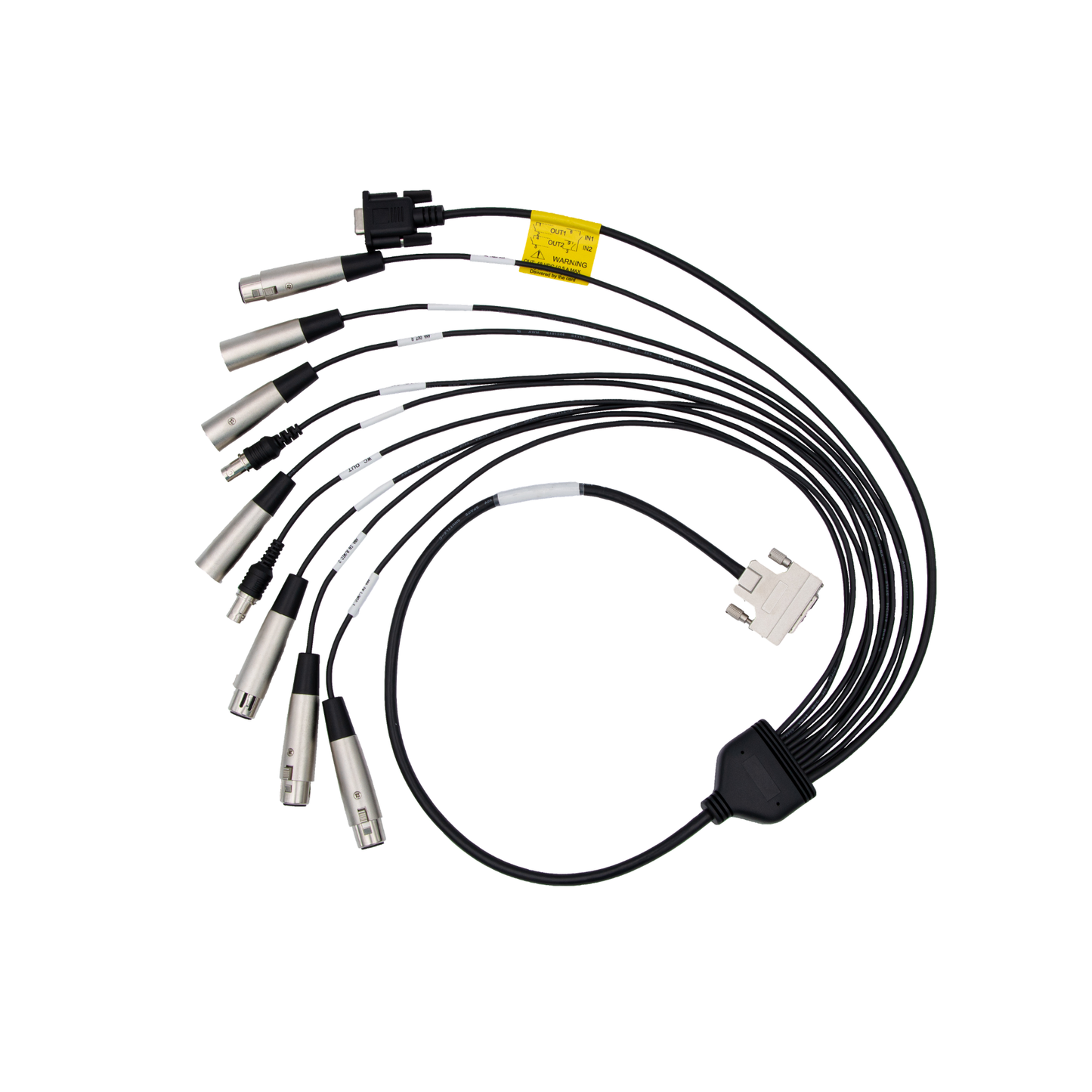
- Connector for breakout cable or custom integration — low profile card with 2 brackets included.
| Parameter | Value |
|---|---|
| Form factor | Low profile — standard and low profile brackets included |
| Expansion bus | PCI Express x1 (x2, x4, x8, x16 compatible) |
| Dimensions | L: 168 mm × H: 69 mm × l: 20 mm |
| Analog inputs | 2 balanced Mic/Line level inputs |
| Analog outputs | 2 servo-balanced line outputs |
| A/D & D/A converters | 24 bits / 192 kHz |
| Line — max input level / impedance | +24 dBu / >10 kΩ |
| Line — analog gain | -88 dB to +39 dB in 0.5 dB steps |
| Line — digital gain | -90 dB to +12 dB in 0.1 dB steps |
| Mic — max input level / impedance | +10 dBu / >10 kΩ |
| Mic — analog gain | 0 dB to +65 dB in 0.5 dB steps |
| Mic — max sensitivity | 0 dBfs for a -55 dBu input signal |
| Mic — phantom power | Switchable 48V per input |
| Mic — EIN | <-124 dB @ Gain 65 dB (48kHz) |
| Max output level / impedance | +24 dBu / <100 Ω |
| Digital gain (outputs) | -90 dB to +12 dB in 0.1 dB steps |
| Digital input | 1 stereo AES3 input — sample rate 32 to 192 kHz |
| Digital output | 1 stereo AES3 output — sample rate 32 to 192 kHz |
| Hardware SRC ratio | From 1:8 to 7.5:1 |
| Headphone output | 1 stereo — 20 mW for 600 Ω — 3.5mm TRS jack |
| GPIs / GPOs | 2 dry contact GPIs / 2 relay GPOs (0.5 A, 48 VCC) |
| Sync inputs | 1× AES11 + 1× Word Clock input |
| Word Clock output | 1× |
| Sample format | PCM (8, 16, 24, 32 and 32 float bits), Float IEEE754 |
| Analog audio performance | Inputs | Outputs |
|---|---|---|
| SNR A-weighted | >110 dBA | >115 dBA |
| SNR unweighted | >108 dB | >112 dB |
| THD+N @18dBu / 1kHz | <-96 dB | <-101 dB |
| Crosstalk @1 kHz / @15 kHz | -111 dB / -110 dB | -130 dB / -111 dB |
| Frequency response @48kHz | ±0.5 dB | ±0.08 dB |
| Channel phase @1 kHz | <0.01° | <-7.5° |
- Windows (from Windows 10 and Server 2016) — ASIO, WASAPI/DirectSound
- Linux (from Linux Kernel 4.9) — ALSA, Libgpiod
- One driver package — multi-application and multi-card API available
- Digigram ALP-X Manager (Windows) — one unified control panel for the whole ALP-X range, manages up to 8 ALP-X cards. Two working modes: Light (2 I/O channels) and Full (4 I/O channels — analog and AES3)
- Digigram ALP-X ASIO Settings (Windows) — intercard synchronization, select I/Os through ASIO (others can be used through WASAPI)
- Inter-board synchronization — up to 8 ALP-X cards via inter-board sync cable
What is the Digigram ALP222e-MIC?
The versatile PCIe stereo sound card for professional PC-based audio systems that require microphone inputs. Guarantees unparalleled quality for audio and voice recording in audio production, equipment monitoring and recording markets.
What is the difference between the ALP222e and the ALP222e-MIC?
The ALP222e-MIC adds microphone-level inputs with high-end preamplifiers, switchable 48V phantom power per input, and a mic gain range of 0 to +65 dB with EIN <-124 dB — making it suitable for both line and microphone sources.
Does the ALP222e-MIC support phantom power?
Yes. 48V phantom power is switchable independently on each of the 2 mic/line inputs.
How many I/O channels does the ALP222e-MIC provide?
2 mono analog channels and 1 stereo AES3 channel — a total of 4 mono I/Os. Plus 1 stereo headphone output.
Does the ALP222e-MIC have a headphone output?
Yes. 1 stereo headphone output (20 mW for 600 Ω) via a 3.5mm TRS female jack.
What PCIe slot does the ALP222e-MIC require?
It uses a PCIe x1 lane and is compatible with x2, x4, x8 and x16 slots. Low profile form factor with standard and low profile brackets included.
Can I use multiple ALP222e-MIC cards in one system?
Yes. Up to 8 ALP-X cards can be connected via an inter-board sync cable and managed from Digigram's unified ALP-X Manager control panel on Windows.
What cables and connectors are included?
One 1m breakout cable with XLRs for audio I/Os and AES11 input, BNC for Word Clock I/O, DB9 for GPIO, and a 3.5mm TRS female jack for headphones.
Share